
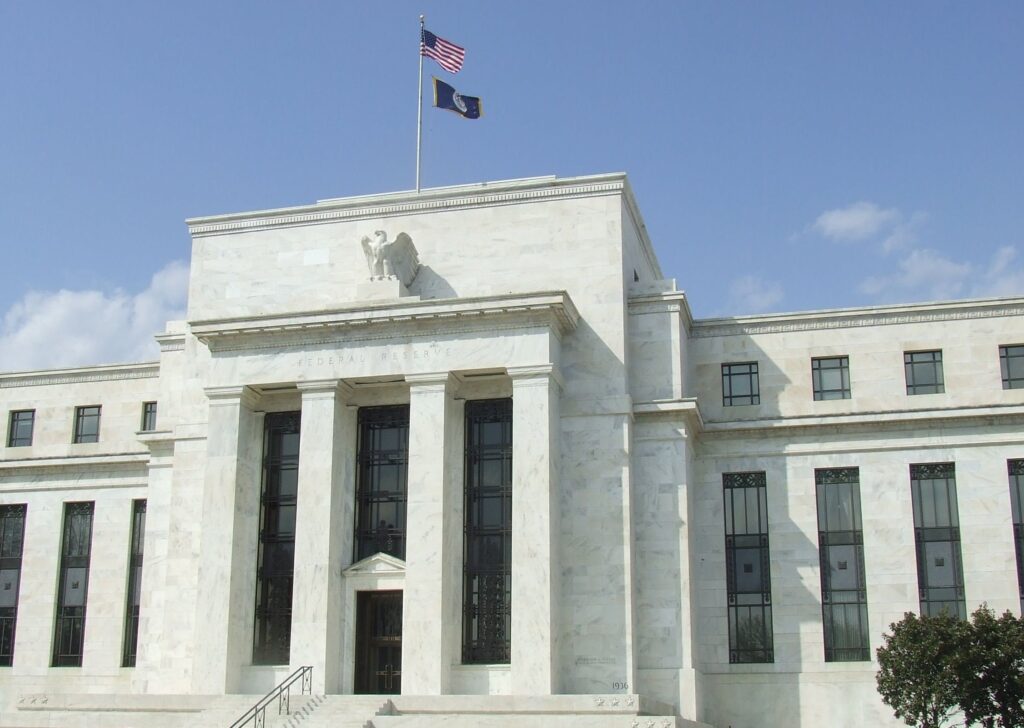
The Federal Open Market Committee (FOMC) held the federal funds rate at 3.50% to 3.75% on Wednesday in an 11 to 1 vote, with Governor Stephen Miran dissenting in favor of a quarter point cut. The accompanying Summary of Economic Projections raised growth forecasts to 2.4% for 2026, lifted headline and core inflation projections to 2.7%, and maintained the unemployment rate outlook at 4.4%. The median dot plot continued to signal one cut this year, though seven of nineteen officials projected none. Chair Powell noted that progress on inflation has been slower than hoped, and the FOMC statement cited elevated uncertainty surrounding the economic implications of the Middle East conflict.
Adding to the hawkish tone, the February Producer Price Index (PPI) for final demand rose 0.7% on a monthly basis, more than double the 0.3% consensus, and accelerated to 3.4% on an annual basis, the highest reading in a year. Core PPI, excluding food and energy, increased 0.5% for the month and 3.9% from a year ago, also well above expectations. The increase was broad based, with services costs rising 0.5% and goods prices advancing 1.1%, led by food and energy components. Notably, the February data predates the most acute phase of energy supply disruptions from the Iran conflict and does not capture the full extent of recent cost pressures.
Treasury yields moved higher during the week as the PPI report and the Fed’s cautious tone weighed on rate cut expectations. The 2-year U.S. Treasury yield rose to approximately 3.90% and the 10-year to approximately 4.40% at the time of this writing. U.S. equities continued to decline, with the S&P 500 falling approximately 1% to close near 6,550, its fourth consecutive weekly loss and approximately 6% below the all-time high set in late January. West Texas Intermediate crude oil eased hovered near $100 per barrel, with notable intraweek swings as Iran struck energy infrastructure in the Gulf. Gold fell from approximately $5,100 per ounce to near $4,600 as a stronger dollar and fading rate cut expectations prompted broad selling in precious metals.
The Chandler team believes the window for rate cuts this year has narrowed, with persistent services inflation and oil driven cost pressures making it harder for the Fed to ease without clearer evidence of price stability. We expect the federal funds rate to remain at 3.50% to 3.75% through at least midyear, with one 25 basis point reduction possible in the second half of 2026 if energy prices moderate and core inflation resumes its decline. Portfolios remain positioned with an emphasis on safety, liquidity, and disciplined credit risk management.
Next Week: S&P Global U.S. Manufacturing PMI, S&P Global U.S. Services PMI, Jobless Claims, University of Michigan Sentiment.
© 2026 Chandler Asset Management, Inc. An SEC Registered Investment Adviser. Data source: Bloomberg, Federal Reserve, and ADP. This report is provided for informational purposes only and should not be construed as specific investment or legal advice. The information contained herein was obtained from sources believed to be reliable as of the date of publication, but may become outdated or superseded at any time without notice. Any opinions or views expressed are based on current market conditions and are subject to change. This report may contain forecasts and forward-looking statements which are inherently limited and should not be relied upon as an indicator of future results. Past performance is not indicative of future results. This report is not intended to constitute an offer, solicitation, recommendation, or advice regarding any securities or investment strategy and should not be regarded by recipients as a substitute for the exercise of their own judgment. Fixed income investments are subject to interest rate, credit, and market risk. Interest rate risk: The value of fixed income investments will decline as interest rates rise. Credit risk: the possibility that the borrower may not be able to repay interest and principal. Low-rated bonds generally have to pay higher interest rates to attract investors willing to take on greater risk. Market risk: the bond market, in general, could decline due to economic conditions, especially during periods of rising interest rates.