
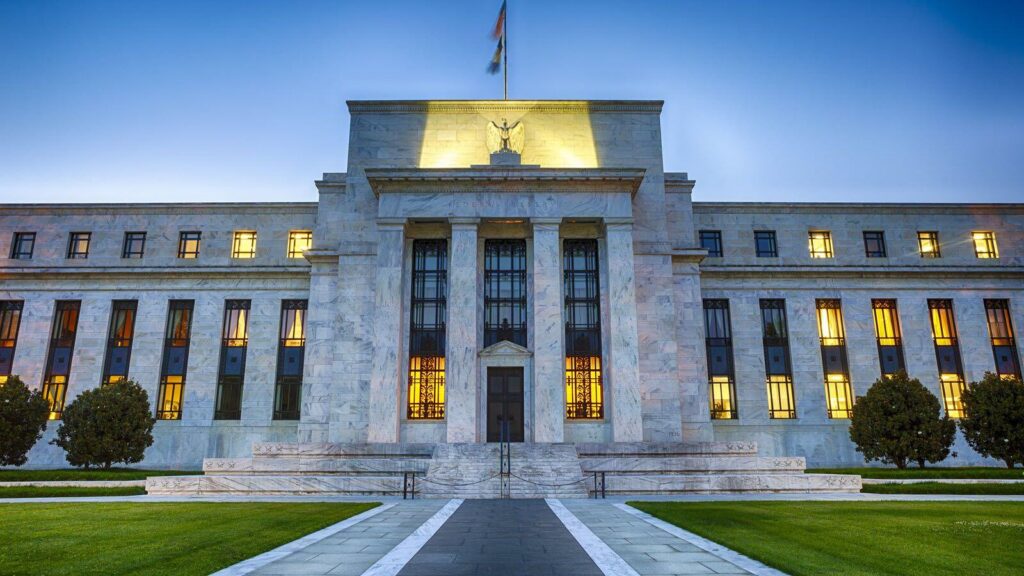
As 2024 drew to a close, the resilient consumer continued to drive growth. Inflationary trends have subsided, but some components remain sticky, and core levels remain above the Fed’s target. The labor market reflects an improved balance between supply and demand for workers. While job creation has been robust, continuing jobless claims remain elevated. Given the economic outlook, we expect gradual normalization of monetary policy and a steepening yield curve.
As anticipated, the Federal Open Market Committee (FOMC) reduced the Fed Funds Rate by 25 basis points to the range of 4.25-4.50% at the December meeting. Although the cut was widely anticipated, market participants viewed the trajectory of rates in the SEP as ‘hawkish.’ Chair Jerome Powell reiterated previous statements indicating the economy is in a good place and that monetary policy is well positioned. The Fed released the quarterly Summary of Economic Projections (SEP), which now forecasts a higher central tendency of core inflation and a higher longer run Fed Funds forecast. In the Chandler team’s view, the updated SEP reflects the continued resiliency of the US economy and the corresponding risk of inflation taking longer to reach the FOMC’s two percent objective in 2025.
At the end of December, the 2-year Treasury yield was 1 basis point lower, and the 10-Year Treasury yield was 69 basis points higher, year-over-year. The spread between the 2-year and 10-year Treasury yield points on the curve increased to +33 basis points at December month-end versus +2 basis points at November month-end. The yield curve inversion which began in July 2022 was historically long. The average historical spread (since 2004) is about +99 basis points. The 3-month and 10-year Treasury yield curve normalized to +25 basis points in December from -32 basis points in November.