
10/27 – Weekly Economic Highlights

The US economy grew well above trend in Q3 2023, with a 4.9% increase in Gross Domestic Product (GDP), marking the fastest growth in nearly two years. The primary factor driving this growth was a 4% rise in consumer spending as a healthy US job market continues to support strong household spending.
10/20 – Weekly Economic Highlights

US Treasury rates increased after substantial swings this week, and the curve became significantly less inverted as economic data continued to reflect a resilient consumer and labor market strength. Retail Sales rose 0.7% in September after an upward revision to 0.8% in August, exceeding the consensus forecast. Control Group Sales, which are used to calculate gross domestic product and exclude food services, auto dealers, building materials stores and gasoline stations, rebounded 0.6% and reflected broad increases across sectors.
10/13 – Weekly Economic Highlights
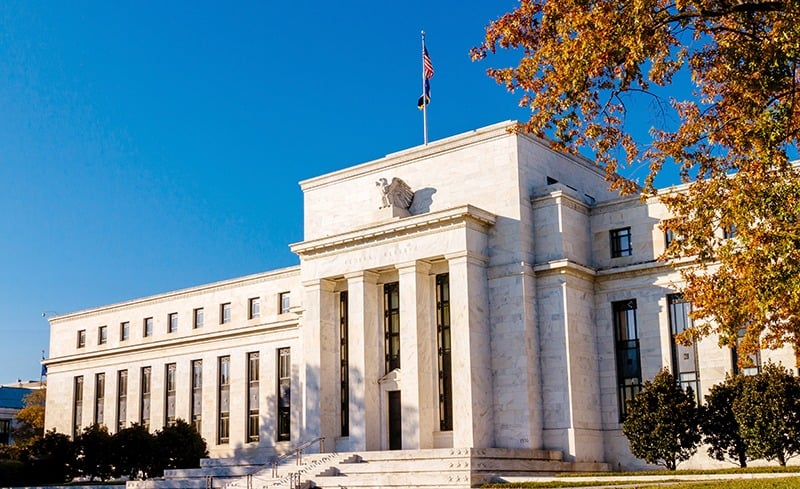
The US Treasury market rallied this week in a flight to quality move that resulted from the tragic events in the Middle East along with comments from Federal Reserve Open Market Committee (FOMC) members indicating that monetary policy is sufficiently restrictive, therefore they might be done raising short-term interest rates for now.
10/6 – Weekly Economic Highlights

Inclusive of today’s stronger than expected labor report, the market digested a significant amount of employment data this week. The U.S. economy added 336,000 jobs in September, significantly higher than market expectations of 170,000, and the July and August payroll reports were revised higher as well by 119,000.
9/29 – Weekly Economic Highlights

Longer term Treasury yields migrated higher on a week-over-week basis as market participants continue to ‘price in’ a higher for longer narrative on restrictive monetary policy settings from the Federal Reserve. Absent a last minute compromise, the US government is expected to shut down this weekend. Given the progress made by the US Senate on a continuing resolution to keep the government open, we believe the shutdown is likely to be relatively short, but nonetheless will have implications for the visibility on the trajectory of the economy.
9/22 – Weekly Economic Highlights

The Federal Reserve (Fed) opted to maintain its key policy rate, the federal funds rate, within the range of 5.25% to 5.5% this week. Nonetheless, the Fed conveyed a consensus view that another rate hike is possible later in the year, along with its commitment to keeping rates at their current level until inflation subsides closer to its 2% target, endorsing a ‘higher-for-longer’ strategy.
9/15 – Weekly Economic Highlights

Economic data released this week provided the Federal Reserve with key information to digest before their upcoming meeting on September 20th. The August Consumer Price Index (CPI) came in slightly higher than expected, with the headline CPI up 0.6% month-over-month and 3.7% year-over-year, accelerating from 3.2% year-over-year in July.
9/8 – Weekly Economic Highlights

This week’s inflation data provided encouraging indications of moderating inflation trends. The Consumer Price Index (CPI) witnessed a monthly increase of 0.2% in July, while the annual CPI experienced a slight rise to 3.2% due to an unfavorable year-over-year comparison
9/1 – Weekly Economic Highlights

This week’s inflation data provided encouraging indications of moderating inflation trends. The Consumer Price Index (CPI) witnessed a monthly increase of 0.2% in July, while the annual CPI experienced a slight rise to 3.2% due to an unfavorable year-over-year comparison
8/25 – Weekly Economic Highlights

Treasury yields drifted higher over the course of the week as the light economic data released largely followed recent trends consistent with stable growth. Existing home sales for July came in moderately below expectations at 4.07 million compared to the estimate of 4.15 million, a trend the Chandler team expects to continue given the large disincentive for current homeowners to trade out of existing homes given the difference between existing 30 year mortgage rates (below 3% for many) and the current level of 30 year mortgage rates (7% area).